
Water treatment chemicals · Tianjin, China
Home / Applications

Applications

Three duties cover most of the volume we ship: clarification, dewatering and grade selection. Each block shows the order the chemicals go in, because the sequence matters as much as the product.

01

Municipal & Industrial Wastewater

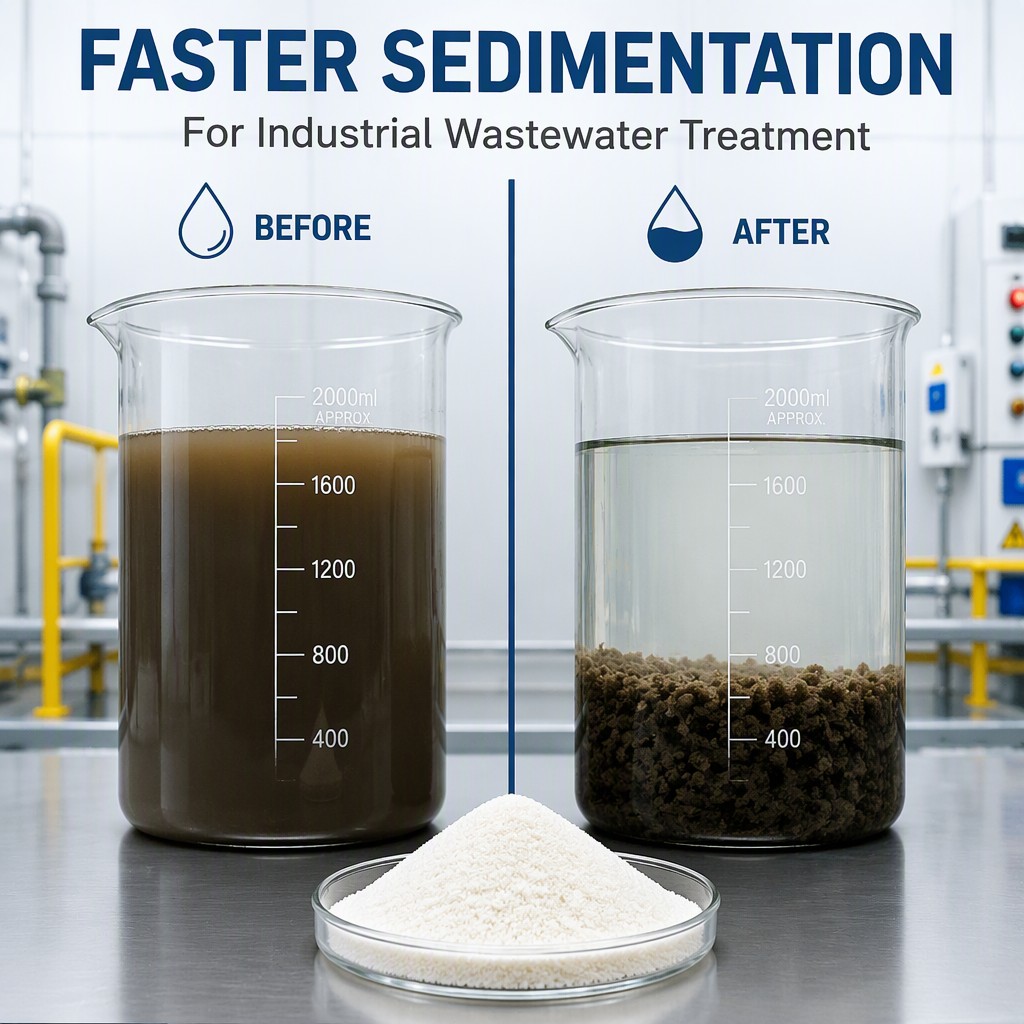
The classic two-stage duty. A coagulant neutralises the charge on the colloids and starts a floc; a polymer grows that floc until it settles or floats. Get the pairing wrong and the clarifier looks like it is doing nothing.
Municipal & Industrial Wastewater
Municipal & Industrial WastewaterCoagulation test: raw effluent, then floc settled with the chemicals
PAC 28% / 30%Polymeric ferric sulfateAnionic polyacrylamideCationic polyacrylamide
Typical programme
PAC or PFSStep 1 · Charge neutralisationFast mix, 1–3 min
Anionic / cationic PAMStep 2 · Floc growthSlow mix, 10–15 min
Clarifier / DAFStep 3 · Settling, flotation or filtrationSludge to dewatering

Doses and mixing times are confirmed against a jar test on your own water or sludge.

02

Sludge Dewatering

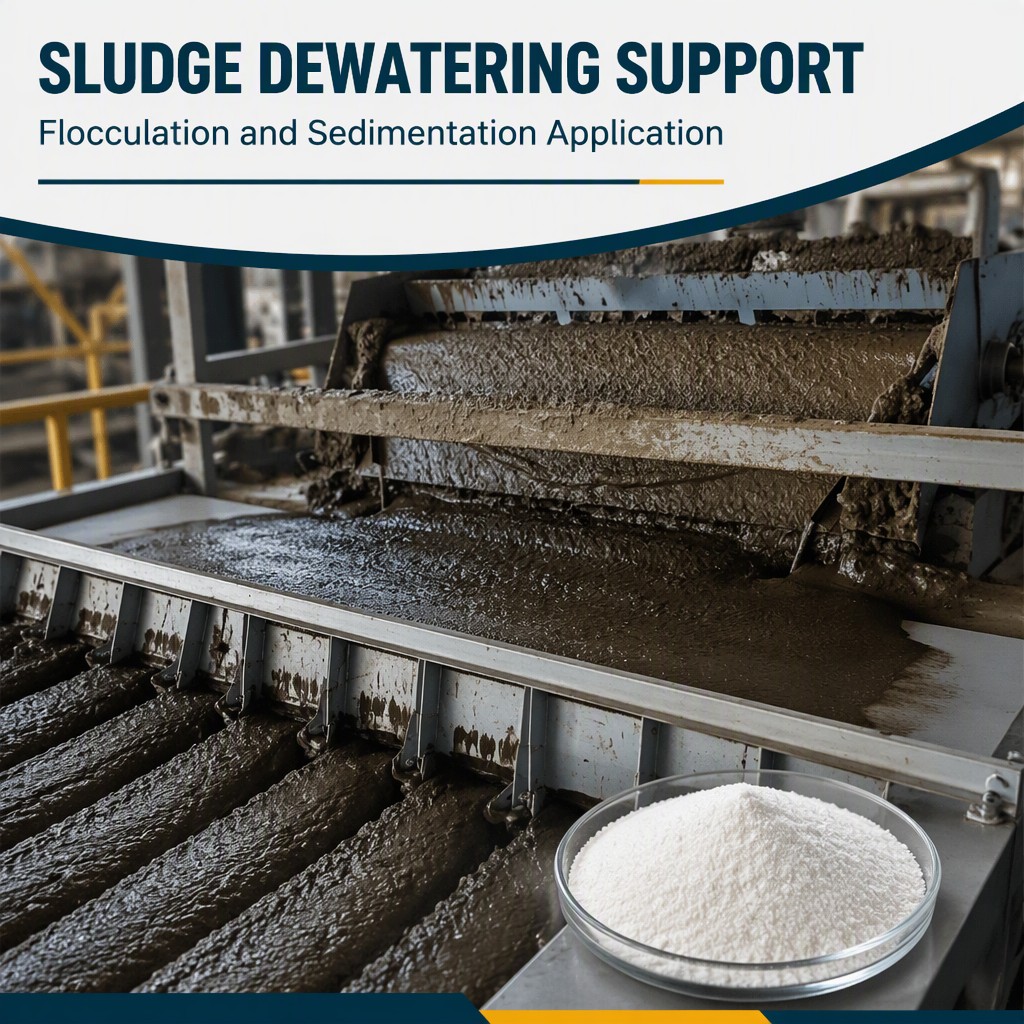
Dewatering is decided by the polymer, not the press. The right cationic grade releases free water quickly, keeps the cake firm and stops the belt blinding — which is what actually limits throughput.
Sludge Dewatering
Sludge DewateringFilter press discharging a cake after polymer conditioning
Cationic polyacrylamide (10%–80% charge)PFS for conditioningLime where pH allows
Typical programme
Cationic PAMStep 1 · Floc the sludgeInline, 30–60 s
Belt / plate / screw pressStep 2 · Cake formationCake dryness varies by sludge
Return to head of worksStep 3 · Solids load checkProtects the plant load

Doses and mixing times are confirmed against a jar test on your own water or sludge.

03

Grade Selection & Jar Test

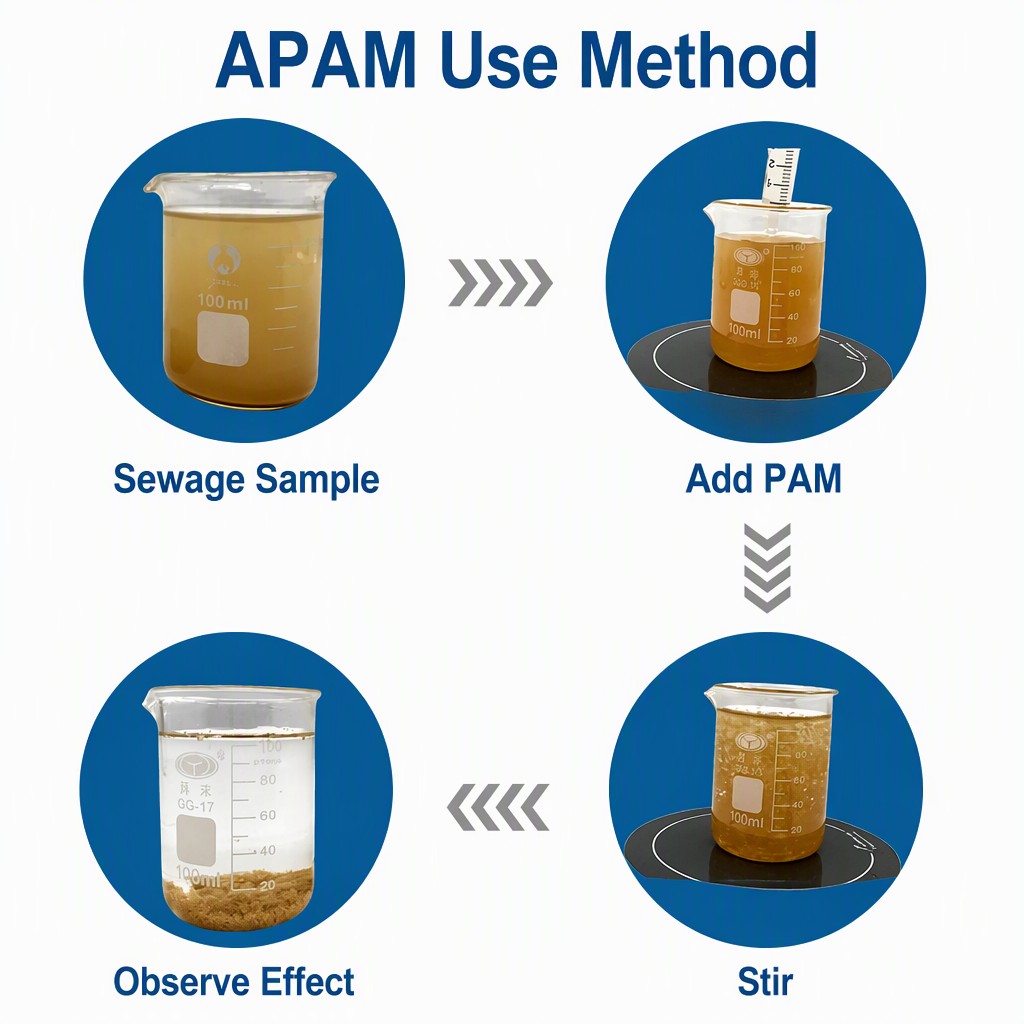
Two polymers with the same molecular weight can behave completely differently on your water. We select on a jar test rather than on a data sheet, and the sample is free so the test can happen on your bench.
Grade Selection & Jar Test
Grade Selection & Jar TestSample, dose, stir, observe — the only reliable way to pick a grade
Free sample of two or three shortlisted gradesDosing guidanceTDS and MSDS with the sample
Typical programme
SampleStep 1 · Raw water or sludgeOne litre is enough
DoseStep 2 · Coagulant first, then polymerFast then slow mix
ObserveStep 3 · Floc size, settling, clarityPick the lowest dose that works

Doses and mixing times are confirmed against a jar test on your own water or sludge.

04

By industry

Starting points only — the grade that wins is the one that works in the jar test, not the one that sounds right on paper.

Municipal sewageCoagulant → flocculantPAC 28% / 30% · Cationic PAM for sludge
Textile & dyeingCoagulant → flocculantPFS (decolourising) · Cationic PAM
Paper & boardCoagulant → flocculantWhite PAC / alum · Anionic or non-ionic PAM
Coal washingCoagulant → flocculantPAC · Anionic PAM, high MW
Sand & gravel washingCoagulant → flocculantPAC · Anionic PAM
Mining & tailingsCoagulant → flocculantPFS or PAC · Anionic / non-ionic PAM
ElectroplatingCoagulant → flocculantPAC / PFS · Cationic PAM
Food & slaughterhouseCoagulant → flocculantPAC · Cationic PAM
Aquaculture & pondsCoagulant → flocculantPAC 28% · Clarifier for small volumes
Nutrient removalCoagulant → flocculantSodium acetate / glucose

Send the water, not the adjectives.

A litre of sample, the pH and the suspended solids are enough for us to shortlist two or three grades and send free samples.

Describe the application
Request a quote